

2025 – Year End

This has been a challenging year for many. We have survived it though and are stronger for it. The government transition in the US caused many of our relationships in that sector to be paused, but we continued with our non-government clients. We hope that our government relationships resume at some point, because we feel that there is a lot we can do for them.
One of the most interesting of our non-government clients is the Infectious Diseases and Oncology Research Institute in South Africa, for whom we ran more workshops and helped to develop a culture vision and culture strategies, as part of an initiative called “Early career Development and Growth Ecosystem” (EDGE). This work was done in a “dialogic” manner so that those who are affected had a strong voice in both the vision and strategies. The feedback we received from the concluding event was,
“Congrats on an excellent meeting. Well stewarded with clear outputs despite tight time constraints. Well done and thanks. Now onto the next critical stage.”
One of our most significant milestones for 2025 was the development and launch of Streamline™ – an integrated vision/strategy/execution platform. We had been hearing for years how awful Jira was, and how disconnected teams and team members are from vision and strategy, which in turn leads to a degraded sense of responsibility for outcomes. We decided to conceive and create a fresh approach from the ground up – a tool that gives people direct line-of-sight between vision, strategy, and execution at all times. The result was Streamline.
Streamline is also dramatically less expensive if one considers the cost of Jira add-on components for vision and strategy; so instead of the Jira Frankenstein’s monster of add-ons, one can use a less expensive platform that was built from scratch to enhance end-to-end visibility and goal-oriented rather than task-oriented work (more on that below).
AI In Everything
Everyone is using AI now, as it continues to improve, and people are learning how to use it more effectively. AI is a moving target: the best way to use it today is different from the best way to use it tomorrow – it continues to evolve and we must too. AI companies have moved beyond the “transformer” LLM architecture: over the decades, AI has improved through the development of new architectures.
We added AI to our leadership program early on, by embedding questions for participants to ask their favorite AI assistant. We have the participants then challenge the AI’s responses: that is how we flipped the use of AI to teach people to think critically.
We are currently completing a major new feature set for Streamline that includes an AI assistant. We don’t add AI unless it is really useful, and in this case, AI makes possible a feature that would not have been possible otherwise. We will be announcing this new feature set soon.
C-Levels Get Leadership Training – But What About Everyone Else?
Streamline strongly complements our leadership program, which is the knowledge side of the equation for how to create a culture of moving quickly and effectively. Unlike most leadership programs, which are designed for executives, our program is designed for everyone else. That’s important, because when executives take leadership courses, they soon return and realize that they cannot make effective use of what they learned because they still rely on the leadership skills of everyone below them.
That’s why our program, Constructive Agility® for Leaders, was designed to be scalable and cost-effective, and one can complete it in the course of one’s work. Yet it is highly effective because: (1) it arms people with an understanding of the full range of behaviors that are needed, and (2) it does so in a highly engaging and dialogic manner (there’s that word again – dialogic – it’s important!)
We have also partnered with a business school that has a widely respected business PhD program. Stay tuned!
A Tool that Changes Behavior
Streamline addresses the tool side of the problem. In the words of Bjarte Bogsnes, a founder of the Beyond Budgeting movement and former chair of the Beyond Budgeting Roundtable,
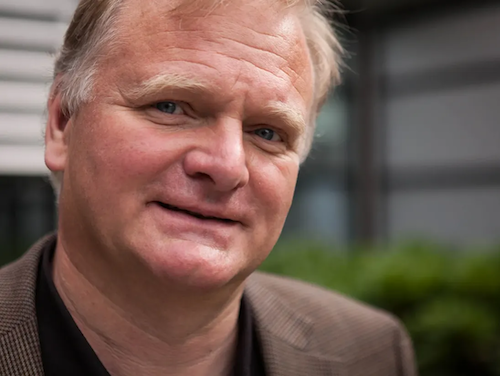
Bjarte Bogsnes, a founder of Beyond Budgeting
“These people are just responding to the system that we have designed for them to operate in. So as you probably know, if you want to change behavior, it’s not about fixing people, it’s about fixing systems, which again changes behavior.”
Unlike other execution tools, Streamline is not task-oriented: instead, it is goal-oriented. That is actually how SpaceX works: At SpaceX, people and teams in development are not given tasks to do: they are given problems to solve – goals. That’s how Streamline works.
To be clear, you can define tasks, but Streamline’s focus is on the objectives, strategies, capabilities, and endpoint goals; tasks are somewhat hidden and are intended for the people doing the work – not for managers. Managers are expected to focus on whether goals are being met, on the issues that are blocking those, and on mitigations for addressing those issues. Those are the things that are front-and-center in Streamline.
And guess what? That changes behavior: managers start to focus on the right things, and they are able to apply the leadership knowledge that they have learned instead of being forced to check task boxes.
A tool shapes one’s business processes, and business processes (including incentives) shape what managers tend to focus on and therefore the culture. Streamline creates a culture that is focused on outcomes and removing impediments, instead of promoting an “is your task done?” and “check-the-list” administrative culture.
